
Dr Andrew Baron
Scientific Director of Biosimilars, Product Characterisation and Biophysics

 Research Posters
|
June 30, 2026
|
4 min read
Establishing similarity for complex biologics requires more than physicochemical comparability, it demands functional evidence reflecting the mechanism of action in a biologically relevant context. Regulators place greater weight on analytical and functional data over comparative clinical efficacy studies. Complex primary cell-based assays are integral to this framework, complementing physicochemical and simpler functional methods within an orthogonal approach. Integrated with high-resolution analytics, these assays strengthen confidence in biosimilarity and support robust regulatory submissions.
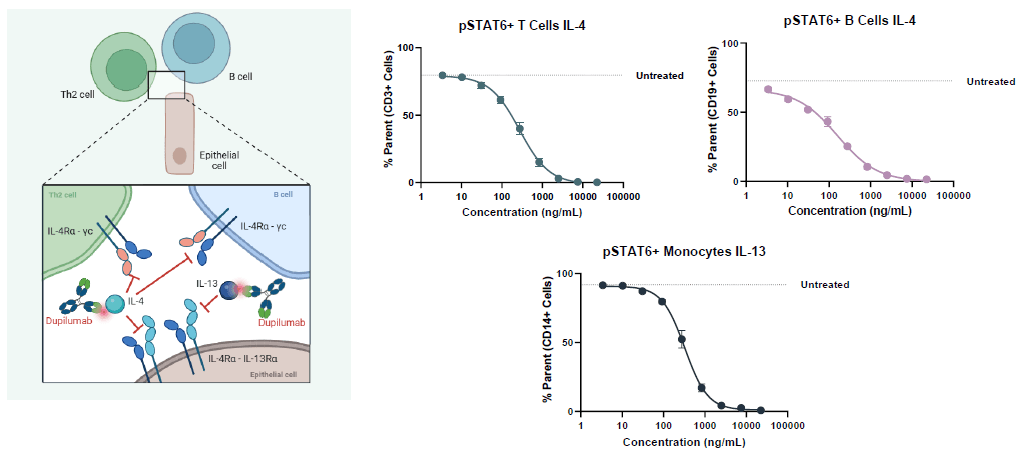
Peripheral blood mononuclear cells (PBMC) were stimulated with IL-4 or IL-13 to activate downstream STAT6 signalling as
measured by flow cytometry. Dupilumab mediated dose-dependent inhibition of STAT6 phosphorylation in T cells, B cells and monocytes following cytokine stimulation, effectively reducing the proportion of pSTAT6+ cells across all subsets and confirming robust blockade of IL-4/IL-13 receptor signalling.
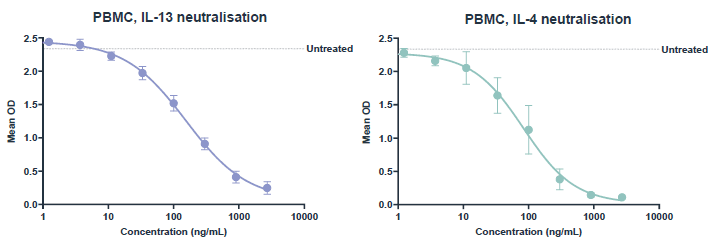
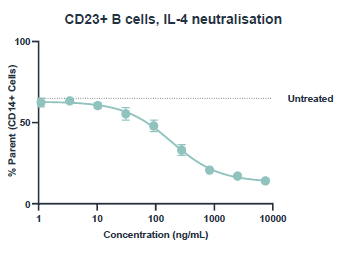
Beyond STAT6 signalling the associated functional responses were assessed, dupilumab suppressed secretion of TARC/CCL17 from PBMC and reduced CD23 surface expression on B cells. These phenotypic and secretory changes demonstrate downstream impact on inflammatory pathways, reinforcing the physiological relevance of the assay.
Proven track record across 20+ biosimilar therapeutics
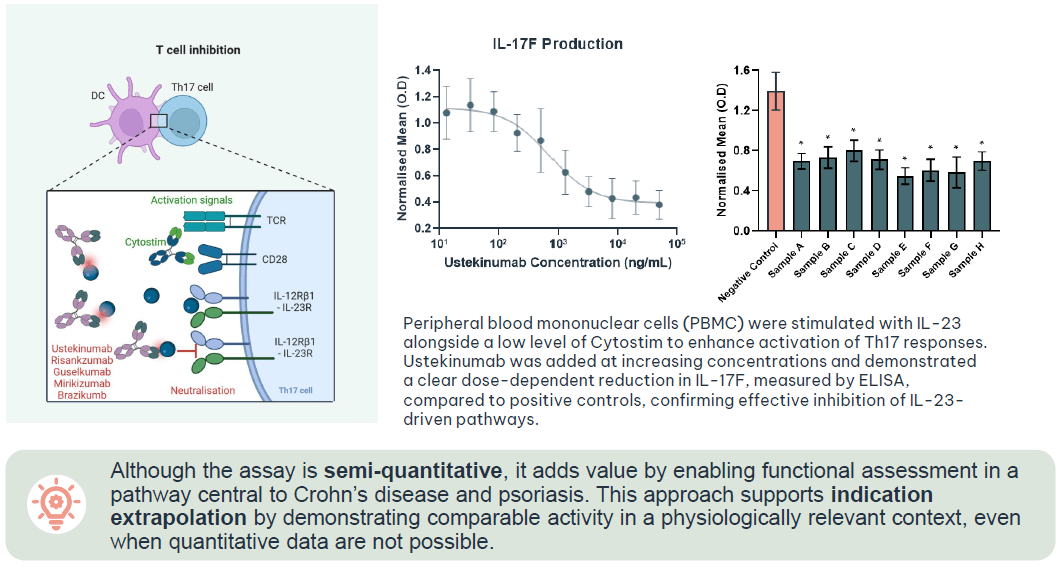
Complex primary cell-based assays offer distinct advantages in biosimilar comparability by providing functional insights that complement traditional binding and reporter assays. Our poster showcases three key examples. Integrating complex primary cell-based assays into biosimilar comparability workflows enhances the clinical relevance and robustness of functional testing. Even qualitative assays, such as the ustekinumab example, provide important evidence for functional similarity in disease relevant pathways and can inform regulatory strategy, including indication extrapolation. We invite discussion on emerging quantitative approaches, particularly in areas of unmet need such as checkpoint modulators.
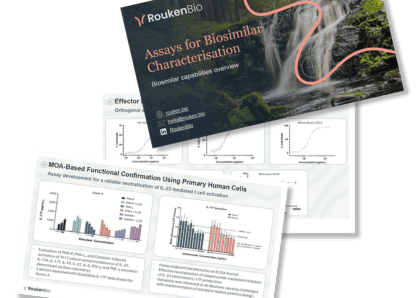
View our Bisomilars Capabilities
🗓️ Stay informed with our monthly scientific newsletter, published on LinkedIn on the last Wednesday of each month.
These editions bring you the latest in drug development breakthroughs, industry trends, and expert insights from the brilliant minds at RoukenBio.
Subscribe today on LinkedInExplore our biosimilar expertise in depth with a detailed slide deck featuring sample data and a real-world case study.


 Webinars